

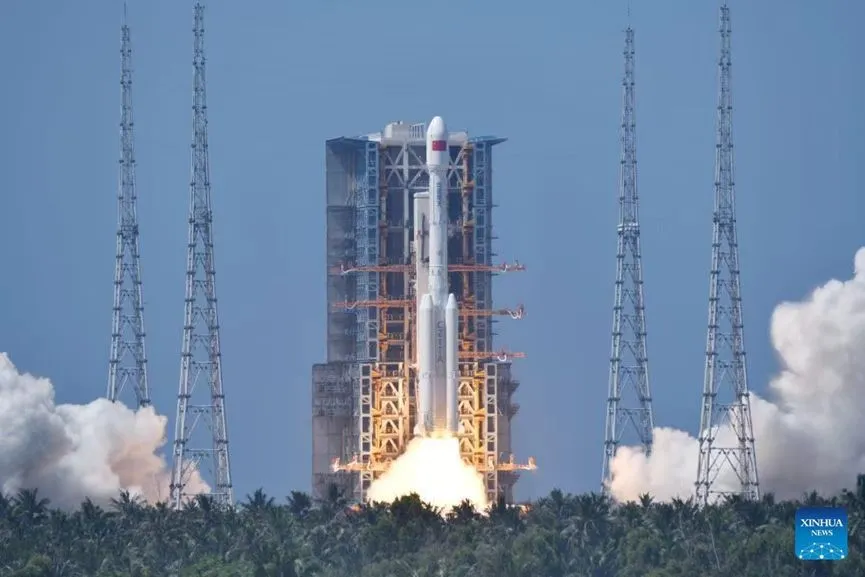
On June 23, 2026 , the sun blazed down over Wenchang, Hainan, China, the subtropical heat mingling with the salty sea breeze. The moment the countdown reached zero, a deafening roar shattered the surrounding silence: the Long March 7A carrier rocket gleamed in the bright sunlight, its flames propelling it straight into the sky, the engine’s roar sweeping across the South China Sea like thunder. I stood among more than twenty spectators—space enthusiasts, local villagers, and engineers—we all held our breath, our expressions solemn. This was no ordinary launch. At this moment, the 90- year journey of the Long March victory and the grand ambition of pursuing dreams of space converged, and this name, etched with the resilience of the nation, was imbued with a completely new meaning.
The Long March: The Cornerstone of National Identity
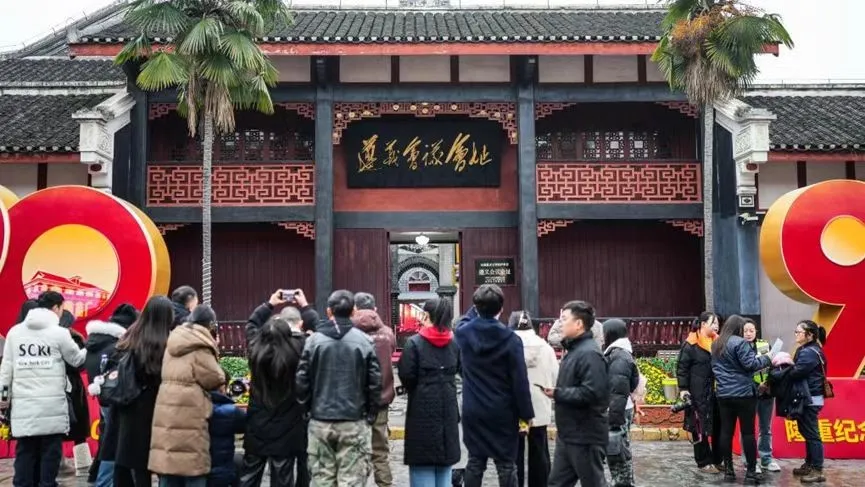
Ninety years have passed since the victory of the Red Army’s Long March. This magnificent expedition of the Chinese Workers’ and Peasants’ Red Army traversed more than ten provinces, covering approximately 25,000 li (about 12,500 kilometers), crossing snow-capped mountains, grasslands, and raging rivers, enduring extreme scarcity and the smoke of war. Countless martyrs shed their blood, forging a monument to collective memory; these spirits remain the cornerstone of the Chinese nation’s identity to this day. For the Chinese people, the Long March is far more than a forgotten chapter of the past: it is a metaphor for unwavering will, a vow of shared hardship, and a steadfast belief — great undertakings must be tempered by time, requiring unity of purpose and indomitable spirit. In 1970 , China launched its first artificial satellite , » Dongfanghong-1 , » naming the carrier rocket » Changzheng » (Long March) . This naming closely links the struggle for survival in the 1930s with the contemporary pursuit of technological self-reliance.
Today, the Long March series of carrier rockets has successfully launched over 500 times, placing China among the three countries globally with independent manned spaceflight and deep space exploration capabilities. With the addition of a third stage, the Long March 7A has become a mainstay of China’s high Earth orbit and deep space missions, steadily lifting heavy satellites and future probes from the coastal Wenchang launch site. Watching it soar into the blue sky above Hainan, I suddenly realized: what I witnessed was not merely cutting-edge technology, but a dialogue across time — the Long March stained with blood and fire, and the Long March gleaming with metallic brilliance.
2025
The New Long March: From Bloodstained Footprints to Aviation Journey
This 90-year legacy is most vividly embodied on Hainan Island itself. Just forty years ago, it was one of the most remote regions in China: its economy relied almost entirely on extensive agriculture and near-shore fishing, and travel to the inland areas was only possible by ferry, often taking several days. Today, Hainan stands at the forefront of China’s opening-up strategy. In 2020 , the central government issued the «Overall Plan for the Construction of Hainan Free Trade Port,» designating the entire island as a pilot zone for high-level institutional opening-up, implementing a series of preferential policies in areas such as trade, investment, cross-border capital flows, and taxation. This was followed by large-scale state-led investment: the island-looping high-speed railway, completed and opened to traffic in 2015 , reduced travel time around the island to 3.5 hours; the combined passenger throughput of Haikou Meilan and Sanya Phoenix airports is expected to exceed 45 million by 2025 ; and 5G coverage in all administrative villages now exceeds 95% . Simultaneously, Hainan has also emerged as a major high-end industry cluster: ecotourism, international medical and health services, intelligent manufacturing, and tropical specialty agriculture are booming.
Every spring, the seaside town of Boao hosts the Boao Forum for Asia Annual Conference. Founded in 2001 , the forum is Asia’s premier platform for economic and governance exchange. Each year, over two thousand representatives from political, business, academic, and international organizations gather here to release flagship research findings such as the «Annual Report on Asian Economic Prospects and Integration,» and to discuss issues like supply chain resilience and climate governance. The transformation of Boao is remarkable, prompting me to reflect: this island, once largely ignored by the world, now boasts a world-class space launch center and hosts a top-tier global forum—a vivid testament to China’s technological self-reliance and its embrace of the world.
Technology and humanities go hand in hand
However, despite the impressive cutting-edge technology and top-notch forums here, the most precious image I took away from Hainan was neither the conference center nor the space launch pad, but a corner surrounded by the sea where time seemed to stand still — Xidao Island.
It’s far from the hustle and bustle of the city and also quite far from the front lines of scientific research. I had the privilege of talking with several islanders who have lived by the sea for generations. Their stories included the inheritance of fishing from generation to generation, the patience to wait for the tide to recede, and the pride in protecting their local customs.
Listening to their stories, it suddenly occurred to me that true modernization may lie in striking a balance between forging ahead and preserving tradition.
The rustic charm of Xidao Island and the grandeur of rocket launches are like two sides of the same coin representing the complex face of modern China: this country can both humbly guard its history and look up at the stars.
Strolling through the narrow alleys of Xidao Island, I realized that measuring a country should never be based solely on the development of its cities or the height of its buildings. The everyday hustle and bustle scattered in the most remote corners also tell its true story and embody the spirit of a nation.
An islander recounted to me the changes he had personally witnessed on Hainan Island: he remembered how the island used to be isolated and difficult to access; now, roads are well-connected and communication is smooth. At the same time, a new type of tourism that values both natural resources and local character is emerging. His words contained no statistics, only his genuine observations of the dramatic changes in his homeland.
These words made me think deeply: only when grand changes ultimately take root in the specific lives of each individual does change truly gain weight.
Why does the spirit of the Long March still inspire people?
Hainan’s transformation is not an isolated case, but a microcosm of China’s development over the past four decades. Since the reform and opening up in 1978, the Chinese government has consistently strived to narrow regional disparities and improve the living standards of all its citizens. The government has undertaken large-scale construction of high-speed railways (now the world’s largest high-speed rail network, exceeding 50,000 kilometers ), highways, bridges, ports, and digital infrastructure, significantly reducing the gap between historically isolated mountainous areas and economic centers. By 2025 , the proportion of administrative villages in China with access to paved roads had increased from 35% in 2000 to 99.9 % . These infrastructure projects are not the end goal, but rather a path to achieving «common prosperity» (a long-term national strategy aimed at ensuring that the fruits of development are shared equitably across regions, ethnicities, and income levels).
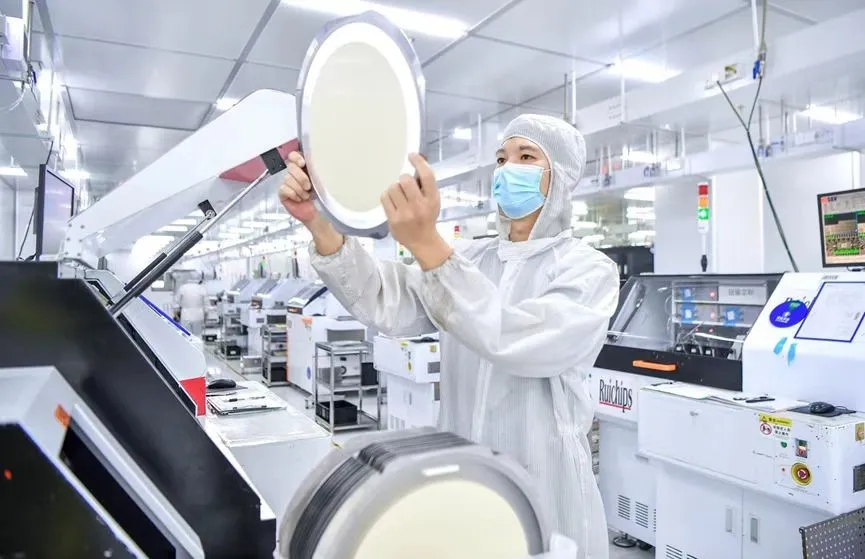
To achieve common prosperity, the Chinese government has dispatched millions of Party members, cadres, and technical experts to impoverished villages across the country to promote grassroots development tailored to local conditions. For a country with 1.4 billion people, significant geographical, economic, and cultural differences, and comprising 56 ethnic groups, reducing inequality is an enormous challenge. However, the Chinese government has prioritized it in its Five-Year Plans, reflecting its governance philosophy of rejecting short-sighted profit-seeking, prioritizing stability, emphasizing inclusiveness, and planning for the long term.
As I boarded my plane to leave Hainan, overlooking the island’s lush trees, azure coastline, and silver road network, I couldn’t help but ponder the «two Long Marches» that define modern China: the first was a bloody journey traversing perilous terrain to secure national survival; the second was a decades-long, conscious ascent towards technological and economic take-off. The backdrop of the «Long March» has shifted from snow-capped mountains to railway tracks, but the core remains the same: national achievements are not accomplished overnight, but require perseverance and coordinated efforts. The continuation of the name «Long March» is not merely to commemorate the past, but to demonstrate to China and the world that true progress is never the achievement of a few, but the concerted effort of hundreds of millions of people. Ninety years after the victory of the Long March, its spirit continues to inspire new journeys—towards the stars and the sea, towards common prosperity, towards a future that respects history and reveres nature. For both the nation and the individual, what defines us is never the destination we reach, but the way we journey.
Este artículo ha sido publicado previamente en China Today